Welcome!

I hope you enjoy reading this blog. I will never claim to be an expert on cheese making, goat milking or farming (everyday I learn something new). However, I have learned so much from others who have generously shared their experience in books and on the web and hope to use this blog to pass it on to folks considering goats. I am completely enchanted by these creatures and how they have enriched our life. The amount I have learned since we got our first two goats has been exponential. Now our herd of 21 Nigerian Dwarf Goats is a big part of our daily life and I can't imagine it any other way. This blog will chart the seasons of milking and cheese making as a record for myself and a resource to others who are looking for a window into what it is like to own these adorable mini dairy goats.
For more information about our farm, please look us up on: Our Farm Website
Or LIKE us on FACEBOOK and check often for creamery updates: http://www.facebook.com/sunflowerfarmcreamery
Showing posts with label feta. Show all posts

Wednesday, January 9, 2013

The End of the Season is Bittersweet

There were a few bitterly cold days recently. When I came in from the barn my pinky fingers (the only ones not involved in milking) were little blocks of ice. If you had visited on those mornings I would have said that I couldn't wait to stop milking. But in truth, when I begin to dry off the herd it always feels a bit sad. Morning and evening milking becomes so much a part of my life, that I begin to depend on these half hour breaks at dawn and dusk as a quiet time to refocus and reflect. The same is true for the daily routine of cheese making. The simple beauty of cracked pepper on a plate, plain cheese in a stainless bowl, the scent of freshly sliced herbs and garlic, and cheese hanging in a flour sack never gets old. The whole process is so aesthetically pleasing that it feels more like reward than work.

Time away from what we love, however, refuels our passion and the goats have earned the weeks of rest when their only job will be to grow the 1-5 healthy kids which are now brewing in all of our 13 bred goats! So I began by switching to just evening milking and soon will milk every other day and by the end of January, they should all be dried off.

Perhaps the perfect celebration of this transition in the season was our final cheese making class last weekend. Eight eager cheese makers gathered for an afternoon to try their hand at milking a goat, snuggle our kids who are now 8 months old, and to make chevre, feta and cajeta. It was such fun to share the magic of turning milk into cheese with others and we had a ball. When the class was done, my energy was renewed and I couldn't wait already to start all over again in the spring.

There will be mornings in February for sure when I miss the splash of milk in a pail, miss leaning against a warm goat to fight the cold, the soft sounds of a goat enjoying grain, but there will be plenty of cold ones, when it will be just fine to ignore the first alarm and sleep in an extra half hour.  There's always next year.

Wednesday, August 3, 2011

Betta' Feta

So last time I made Feta I was impatient. (Recipe from Last Time) I was eager to taste it at every stage and ended up eating it all before it was done becoming good and fettaish. My impetuous nature however worked to my advantage, because I can mentally compare the current batch to my first try at each stage. I worked with the same recipe but took my time and the results are (so far) way better. The cheese is far softer because I was more gentle with my curds, stirring just three times as I heated them. I also added a bit more culture (1/2 tsp) and let it sit a little longer at each stage which is resulting in more flavor. This time I also created a brine (1/2 cup salt dissolved in 1/2 gallon boiling water-then chilled) and have the feta aging in the fridge in brine and whey for 2 weeks at least!
After aging for two days in Tupperware on the counter, I cut it into cubes and put the cheese and the whey in quart ball jars. This is how much cheese I got from 2 gallons of milk. 
Looks good enough to eat already, but I am showing great patience.
Cheese in my fridge soaking in brine.

2 weeks later: So delicious. It is salty, has a good texture and is a big hit with family and friends. Will have to make more soon! For now onto a soft, mold ripened cheese this week. Can't wait for my white mold to arrive in the mail so I can get started!

Note: The next time I tried the same recipe with 2 gallons of milk, my yield was higher and the cheese was softer. I did everything the same except I also added a touch of lipase. (I like the way this one tastes even better.) 61 oz. of cheese before adding brine.  This cheese has been a huge hit so feta will have to be a regular creation. The later in the milking season we get, the longer it seems to take for whey to drain.

Thursday, June 30, 2011

Marinated Feta & Mediterranean Dreams


The other night, we were standing around the barn enjoying a beer and some storytelling. The goats were all in their stalls for the night, softly chewing on hay. It was one of those perfect summer moments that you know you will look back on when the snow is piled up outside. We were chatting with the father of one of our daughter's friends who is married to a woman from Greece. It was in the darkness of a summer barn that he shared with us a tradition from her village. Each year in the weeks that garlic scapes appear, the goats are let out to graze on these tasty aromatic flowers. (This helps the farmers because the scapes have to be cut anyway to allow the energy to go into the garlic bulb.) The resulting cheese is a treat that people far and wide wait all year for and come great distances to enjoy. My mouth watered just listening to him. And now it is clear I will have to plant a garlic garden for this sole purpose, but before then, it is time to make Feta! The cheese I would most like to make is a marinated cheese that is a mix between feta and chevre. So this morning after milking I set to work fueled by visions of goats munching on fields of garlic along the Mediterranean Blue sea. Hopefully these visions will add to the success of my feta.

My recipe is an adaptation of Mary Jane Toth's from Goats Produce Too. See link above to get your copy.

Mild Marinated Feta
Ingredients:
2 Gallons Pasteurized Goat Milk
1/2 tsp DCI Supreme Vegetable Rennet (Double Strength) from dairy Connection
1/2 cup cool water
1/8 tsp Mesophilic Culture MA 19 from France (some recipes use 1/4 tsp) 
(I want to try other cultures this summer and compare: MT1, MM100 and Dairy Connection Feta A)
Salt

Pasteurize Milk
Add culture at 86 degrees
Let sit for 1 hour
Mix rennet with cool water and add to milk
Cover and let set until you see a clean break 45-60 minutes.
Cut curds (see picture)
Let rest for 10 minutes
Stir curds keeping them at 86 degrees (easiest in a sink of warm water, or I used my pasteurizing vat) for 15-30  minutes
Hang curds for 6 hours
Slice into slabs 1-1.5 inches thick
Sprinkle with salt and let sit at room temp for 24 hours (turn and salt 2-3 times)
Then slice into cubes and cover with Olive Oil, garlic, basil leaves, peppercorns and other herbs.
Let sit in fridge in airtight containers for at least a week.
YUM.


2 gallons of milk in pasteurizer 

culture

salt

vegetable rennet

clean break means curds are ready to cut

cutting curds to form small uniform cubes

cutting curds releases the whey

let curds rest before stirring

stir curds for 30 minutes

while stirring try to keep temp at 86 degrees

ready to drain

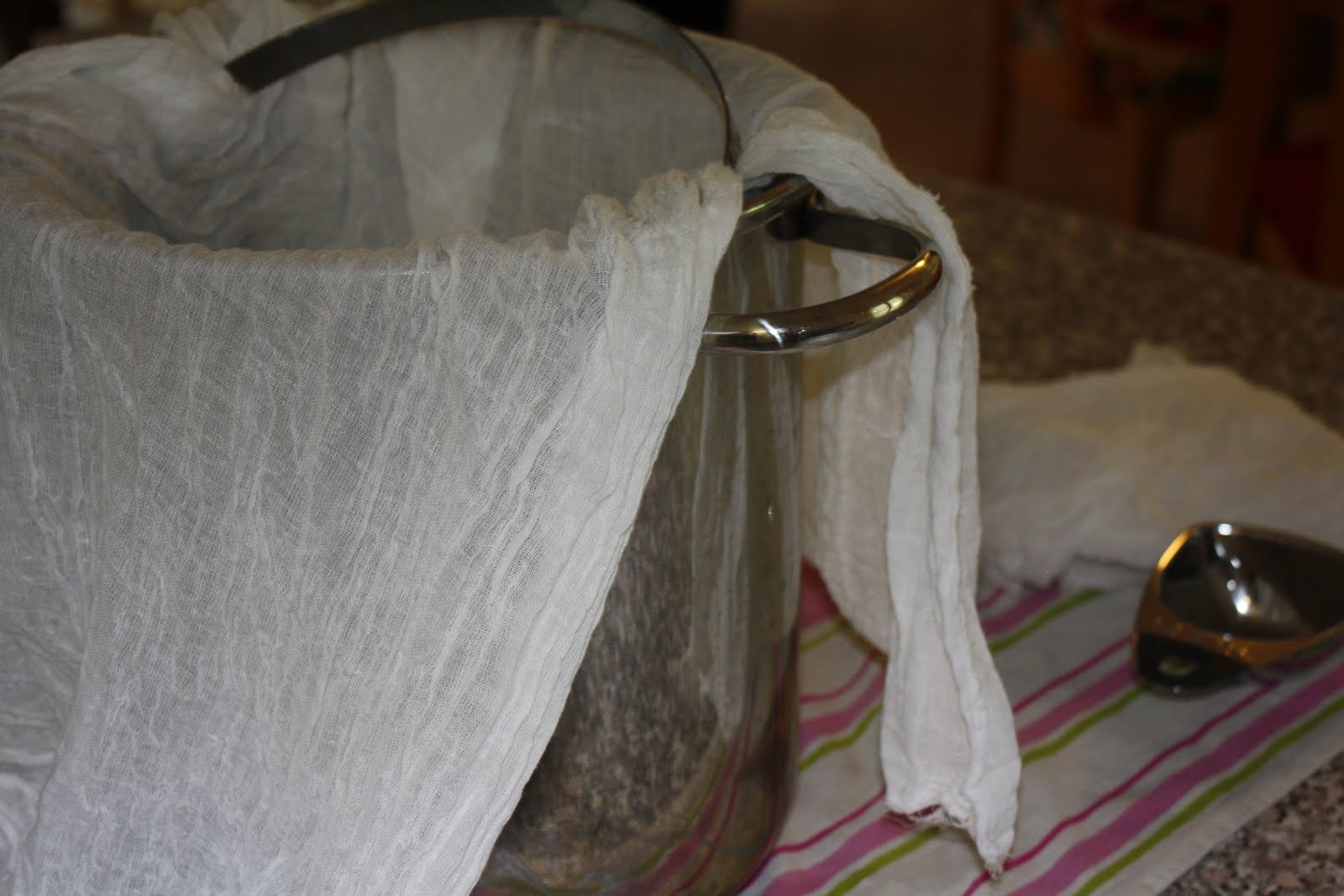
cheesecloth ready over colander in pot


gently transfer curds to drain

before draining

after draining

slice feta 

Salt slabs and let sit. They should each have their own space, I layered them because I only had one container.

after 24ish hours


So now it's evening on the 2nd day

Most will add brine to feta in a jar and leave for a week (or a few) in the fridge.
I decided to jump to the marinated stage.

cut cheese into cubes and taste

before adding oil

add the things you love to olive oil

admire your creation while it sits for a week or more in the fridge to tasty up even more.
An added note: I was so excited to try this cheese that only one container made it to the 2 week mark! It was a thousand times better than the ones we ate right away both in texture and taste. I knew this would be true, but next time I will have the patience to wait!Because I was a little too rough on the curds the cheese was hard. Next time I will stir less.