Welcome!

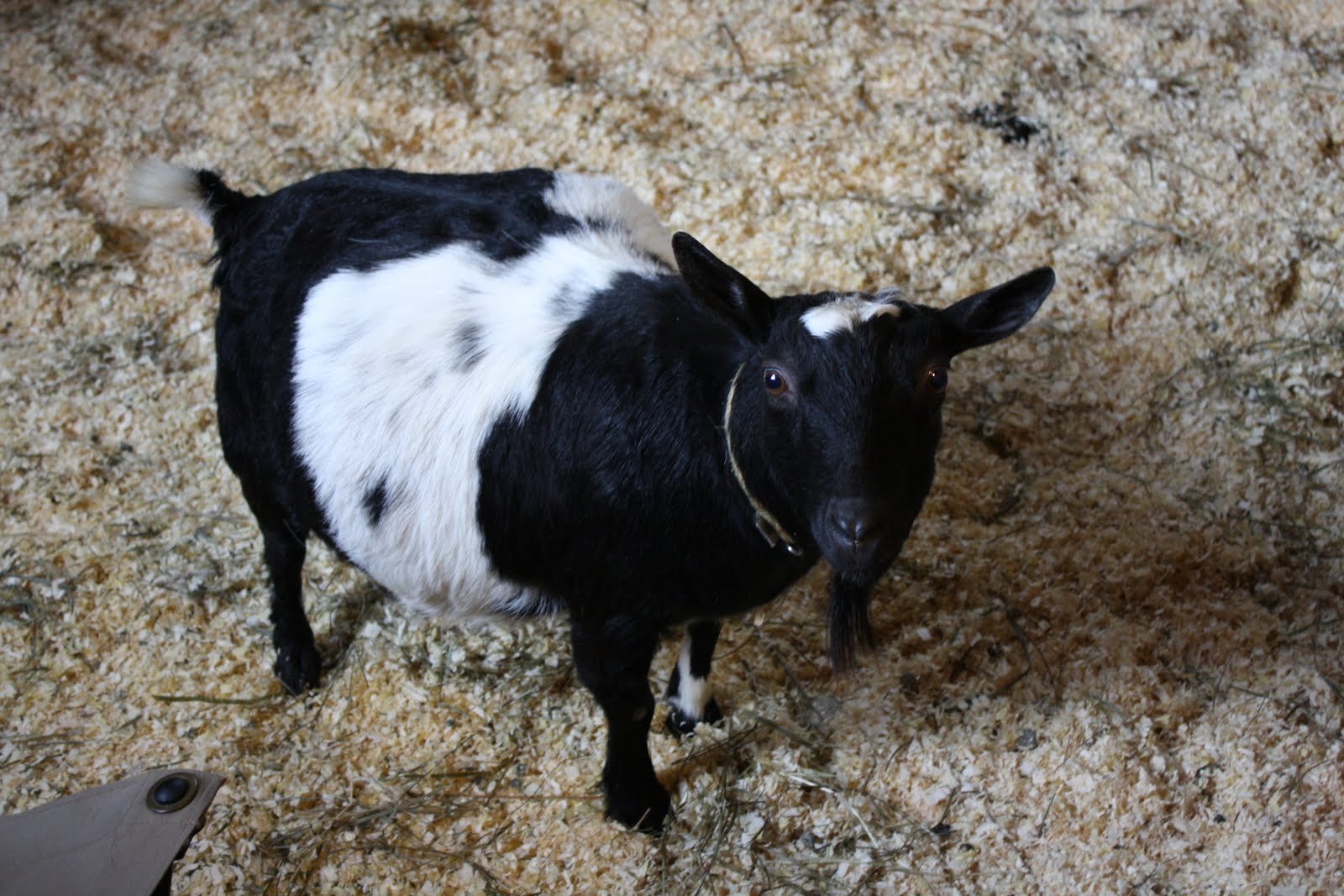
I hope you enjoy reading this blog. I will never claim to be an expert on cheese making, goat milking or farming (everyday I learn something new). However, I have learned so much from others who have generously shared their experience in books and on the web and hope to use this blog to pass it on to folks considering goats. I am completely enchanted by these creatures and how they have enriched our life. The amount I have learned since we got our first two goats has been exponential. Now our herd of 21 Nigerian Dwarf Goats is a big part of our daily life and I can't imagine it any other way. This blog will chart the seasons of milking and cheese making as a record for myself and a resource to others who are looking for a window into what it is like to own these adorable mini dairy goats.
For more information about our farm, please look us up on: Our Farm Website
Or LIKE us on FACEBOOK and check often for creamery updates: http://www.facebook.com/sunflowerfarmcreamery

Wednesday, July 13, 2011

The Creamery...First Steps!

Big Week! Dreams are becoming a reality!
We are starting work on our own cheese making room. Lucky for us, there is an empty building next to our house with a concrete floor and working drain. Lucky me that I have a husband who loves building projects and has the summer off as teacher! When we moved in a year ago the property and this space was filled to the brim with trash. Wish I had taken pictures of it then. Just this week, we removed the last of the junk and now have a clean slate to work with. Chris can already see it finished and spent yesterday excitedly ripping out the insulation and wall board in 90+ degree heat! In the next few months we will turn the space into a small farm store and creamery! The creamery will be 18 x 17, a nice big space to grow into over the next 20 years! The farm store will be up front and about 18 x10. The dairy inspector has been by to take a look at our plans so now the fun begins. We will share pics of the process in case others who are considering taking cheese making out of the kitchen are interested. If any folks stumble across this blog who have built a creamery, PLEASE feel free to add comments sharing your wisdom!
creamery on left, house on right
Farm store/creamery entrance 
Junk from previous owner almost clear

first day of work gutting the space

opening the doors for new possibilities!
The farm store will be in front until just after door, then creamery will go to the back wall.
lumber arrives for front wall!
front wall of cheese kitchen with observation window and door are framed on Day 1
The roof will peak over creamery space with north facing sky lights, door at back leads to big storage room, maybe someday it will be classroom space for a farm school?!
framing complete for roof and wall where sinks will be
Framing done for wall between shop and creamery


3 windows and 3 skylights go in for natural light


Exciting!

Our goats passed their first state required test for dairy animals. When the report came back from the Maine Department of Agriculture we were very excited. Our herd tested negative to Brucellosis and CAE. The vet drew the blood this spring. CAE cost $15.50 and Brucellosis cost $20.00 per goat. We will need to test any new animals we add to our herd. I need to find out if this applies to kids born on our farm that we want to keep and milk. They will also need to be tested for Tuberculosis every 3 years.

Once we are in action, our heat treated milk, single service containers of value added products, and any multi-use containers will each need to be tested by the Department 4 times in each consecutive six months. There is an exception that states: Milk and milk products not produced continuously throughout the year are exempt from being sampled 4 times in any consecutive months which may very well apply to us since we will be seasonal until we are making a good enough profit to retire from teaching!

And getting into Dairy means many hours spent like this!


Monday, July 11, 2011

Mozzarella

Making Mozzarella
Look up how to make Mozzarella and like any other cheese, you will find a million different slight and major variations. There are options that take 15 minutes and others that take 15 hours. When I made it for the second time, I found myself flipping between options and ended up with a mixture of many approaches. My brain was in a distracted mood and this made it an entertaining adventure...however, I have no clear idea of what I did and what I might change next time, so generally I would advise going with one recipe and then making ever so slight changes to it over subsequent batches until it is just the way you like it!

Here is what I did...
Pasteurize 1 gallon of milk, cool to 80.
Add 1 and a half teaspoon citric acid and stir (in the future I would add citric acid to water before mixing it in.)
Heat to 91.
Add 1/4 tsp thermophilic starter. (Not every recipe includes tculture or the wait time.)
Stir well, cover  and let sit for 30-60 minutes.
Add 1/4 tsp rennet mixed with 1/4 cup water and stir.
(Some heat the mixture to 105 degrees and hold for 5 minutes until the curd and whey separate, others do like I did below.)
Let set until you get a clean break (15 minutes)
Cut curd into 1/2 inch cubes and let set for 10 minutes
Hang curds in cheesecloth to drain for an hour
(Save whey for ricotta. To make a little ricotta -enough for a pizza- Bring pot of whey to near boil. Then pour through cheesecloth to get curds. Let drain for a couple of hours, add salt and refrigerate.)
Make curd into 3-4 balls to dip individually in very hot near boiling salted water or whey.


Dip in hot water on slotted spoon for a few seconds. If it slides out holes of spoon it is too hot, but it should want to. This part is really fun. My kids like to come into the kitchen and get in on the action. It is funny how different in texture the cheese comes out with three different people stretching the curd. Cheesemaking has a lot to do with having a gentle touch.
Try to stretch cheese gently. Let it pull down with its own weight.
Dip again in hot water.
Stretch again.
Dip again if needed.
Fold and stretch and knead Mozzarella into a ball.
Dip ball in icy water to set shape.
Salt ball and store in fridge. Or... just eat them with some sliced tomatoes and basil. The only problem with Mozzarella is that 1 gallon of milk does not make nearly enough cheese for something so yummy. Next time I'm starting with 2-3 gallons of milk.

Friday, July 1, 2011

Summer is Officially Here!

Olive enjoys a summer visit from Nikki and family who bought the first wethers born on our farm!

A huge part of having dairy goats is also being parent to the doe's kids each year. As the dairy herd grows so does the number of kids each spring. Nothing is more fun than goat kids! They make getting out of bed each morning a joy and I have spent more time in the barn than anywhere else since they were born 5-6 weeks ago. With this fun also comes the responsibility of finding great homes for each of the goaties who before long we grow very attached to. People faced with the swarm of kids often ask how we know all their names. This question seems funny since we spend hours with them and know each of their personalities well. We love them individually, as much as the dogs who live in our house, and want to make sure that wherever they go, they will be treated like family. We have been so lucky in finding the best homes for our kids. All 9 wethers are now sold to people who care about their animals as much as we do. I can't explain what a relief this is! 
And because of all these sweet babies now we also have milk and cheese! Today the quest for the perfect Chevre continues. It is a tasty adventure! I am working to make the cheese even more creamy and smooth and this morning varied the amount of rennet a bit since my curds were setting very quickly in the first few batches. The vegetable rennet is double strength and so I am experimenting with the perfect amount to set up my Nigerian Dwarf Goat super creamy milk! Today I mixed two drops of rennet in 1/2 cup cool water and then added 1/2 of the rennet water mixture (1/4 cup) to the gallon of milk. We'll see how this goes. So far, it is not setting up as quickly, so as long as the curds still form, I think this will be an improvement.

12 hours later...looks great. It is now hanging to drain in cheesecloth. Unfortunately I did not time this well. It should be good to go in the fridge at 3:00 a.m. Boooo. Oh well. If only those 5 does could milk themselves just one morning. By the looks of the very creamy lovely curds, it will be worth a sleepy day tomorrow!


Yum, yum, yum. Will this ever get old?
I spoke today with a woman who raises Nigerians and Mini Nubians. She loves to add orange peel to her chevre and put it in English Muffins for breakfast. I will have to try that delicious idea!    Breakfast is the next frontier...a yogurt maker is in the mail!

Thursday, June 30, 2011

Marinated Feta & Mediterranean Dreams


The other night, we were standing around the barn enjoying a beer and some storytelling. The goats were all in their stalls for the night, softly chewing on hay. It was one of those perfect summer moments that you know you will look back on when the snow is piled up outside. We were chatting with the father of one of our daughter's friends who is married to a woman from Greece. It was in the darkness of a summer barn that he shared with us a tradition from her village. Each year in the weeks that garlic scapes appear, the goats are let out to graze on these tasty aromatic flowers. (This helps the farmers because the scapes have to be cut anyway to allow the energy to go into the garlic bulb.) The resulting cheese is a treat that people far and wide wait all year for and come great distances to enjoy. My mouth watered just listening to him. And now it is clear I will have to plant a garlic garden for this sole purpose, but before then, it is time to make Feta! The cheese I would most like to make is a marinated cheese that is a mix between feta and chevre. So this morning after milking I set to work fueled by visions of goats munching on fields of garlic along the Mediterranean Blue sea. Hopefully these visions will add to the success of my feta.

My recipe is an adaptation of Mary Jane Toth's from Goats Produce Too. See link above to get your copy.

Mild Marinated Feta
Ingredients:
2 Gallons Pasteurized Goat Milk
1/2 tsp DCI Supreme Vegetable Rennet (Double Strength) from dairy Connection
1/2 cup cool water
1/8 tsp Mesophilic Culture MA 19 from France (some recipes use 1/4 tsp) 
(I want to try other cultures this summer and compare: MT1, MM100 and Dairy Connection Feta A)
Salt

Pasteurize Milk
Add culture at 86 degrees
Let sit for 1 hour
Mix rennet with cool water and add to milk
Cover and let set until you see a clean break 45-60 minutes.
Cut curds (see picture)
Let rest for 10 minutes
Stir curds keeping them at 86 degrees (easiest in a sink of warm water, or I used my pasteurizing vat) for 15-30  minutes
Hang curds for 6 hours
Slice into slabs 1-1.5 inches thick
Sprinkle with salt and let sit at room temp for 24 hours (turn and salt 2-3 times)
Then slice into cubes and cover with Olive Oil, garlic, basil leaves, peppercorns and other herbs.
Let sit in fridge in airtight containers for at least a week.
YUM.


2 gallons of milk in pasteurizer 

culture

salt

vegetable rennet

clean break means curds are ready to cut

cutting curds to form small uniform cubes

cutting curds releases the whey

let curds rest before stirring

stir curds for 30 minutes

while stirring try to keep temp at 86 degrees

ready to drain

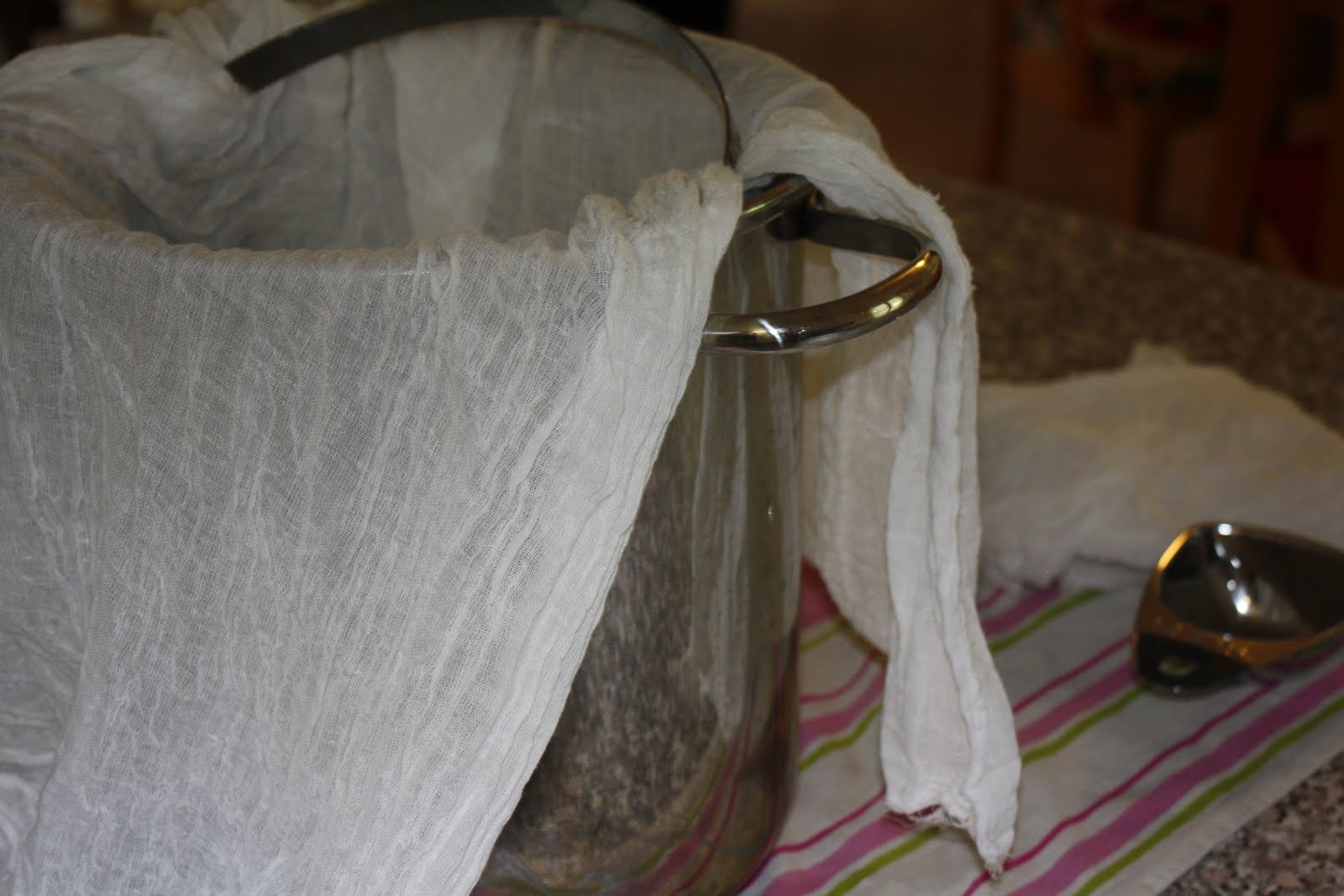
cheesecloth ready over colander in pot


gently transfer curds to drain

before draining

after draining

slice feta 

Salt slabs and let sit. They should each have their own space, I layered them because I only had one container.

after 24ish hours


So now it's evening on the 2nd day

Most will add brine to feta in a jar and leave for a week (or a few) in the fridge.
I decided to jump to the marinated stage.

cut cheese into cubes and taste

before adding oil

add the things you love to olive oil

admire your creation while it sits for a week or more in the fridge to tasty up even more.
An added note: I was so excited to try this cheese that only one container made it to the 2 week mark! It was a thousand times better than the ones we ate right away both in texture and taste. I knew this would be true, but next time I will have the patience to wait!Because I was a little too rough on the curds the cheese was hard. Next time I will stir less.


Wednesday, June 22, 2011

New Chevre is Heavenly!


Like goats, goats owners are known to make their own path. If you need any proof of this google any goat question and you will be amazed at the wide range of answers. What should a dairy goat eat? When should the kids get their CDT shots? Should a pregnant goat get a BoSe injection in Maine? For any one question, goat owners are doing things in a million different ways and it is no different with goat cheese makers. Once a cheese maker moves beyond the no fail packages of prepared starter and rennet, you are on your own with a thousand options. (Thankfully goat owners are incredibly generous with their knowledge and experience, so you are never really alone.) While the cheese making process is amazingly simple and virtually the same no matter what type of cheese you want to make, the details matter and can produce dramatically different results depending on a million factors. This magic so appealing to me. The fact that my water, the hay the goats eat, the forage available in the field, the culture I order and how happy the goats are all play a role in what ends up on the cheese plate is a wonderful reminder that food is not something we can mass produce and still get the same delicious results. It is both simple and complicated and completely connected to the well being of the cheese maker and animal! This summer it is my goal to make cheese every other day. I will post my results on my quest for the perfect, irresistible cheese! This first one was mighty delicious, a great start to the summer.


FIRST SUMMER CHEVRE-JUNE 18
2 gallons milk
1/4 tsp DVI culture from France (Danisco MM100)  for 2-5 gallons
Mixed 1/2 tsp vegetable rennet in 1/4 cup water, then used 2 tbs of mixture 
(I read goat's milk needs less rennet)

•Pasteurize milk then cool to 80F.
•Add culture and let culture sit on surface for a couple of minutes.
•Gently  stir with up ad down motion.
•Add rennet and stir.
•Let sit  about 7 hours.
(I look for the curd to pull away from edge of pot and the whey to cover surface of curds.)
Note: This recipe is causing my curds to set up quickly, can take much longer. 
In thin slabs gently transfer curds to a bag
Drain for 5 hours.
Add salt.
Put in fridge for the night.
The next morning we shape into logs and add herbs. (Dill looks especially pretty rolled onto the outside of cheese mixed with salt and Herbs de Provence.)

Notes:
Target PH for goat milk is 6.4
Our fresh milk tests at 6-7 on June 18. 
We are making cheese every 2-3 days.
June 22-Getting 10 cups a day milking in the morning only.
5 does. (One gives barely any milk, one gives twice the amount of any other goat.)

Monday, June 6, 2011

Lucky 13

After an exciting two weeks of kidding, we have a busy barn full of 13 leaping baby goats. We are keeping the 4 girls (yes bad odds!) and selling the 9 wethers at eight weeks. They all have such personalities already that we know we will miss them when they go, but part of the fun is meeting all the cool families who are interested in having their own goats. The first two will be headed to York to live with a lovely couple who have had a farm for years with animals of all sizes. They brought along a granddaughter to help pick out the bucklings they wanted. Who knows who else we will meet in the coming weeks. We still keep in touch with most of the folks who bought kids and piglets last year and even received a first birthday picture of a goat we sold last year wearing a birthday hat!! He is all grown up and looks just like his mama Bonnie!
The highlight of kidding season was Tess (13 years old) being midwife to our two goats who went into labor at exactly the same time. By the time we got home, six bouncing babies were nursing and Tess had taken care of dipping their umbilical cords and making sure each goat got colostrum. She is a natural! The low point was a kid who was born unable to walk or hold up her head. We did our best: gave her a shot of BoSe, some NutraDrench, and some colostrum via syringe, then brought her in with us by the wood stove, but after watching her all night, she died the next day. It was our first goat to ever die on the farm and it was very sad. I can't imagine it getting much easier with time, but I'm OK with us being emotionally attached. And the surprise of the season: Bonnie had 4 boys! One who came out 2 hours after the rest, long after we thought she was done kidding. Lewis is one of our biggest kids and came out raring to go. Our smallest kid is also Bonnie's (her first). His name is Clyde and he is the cutest thing I've ever seen.
We began milking a couple of days ago. At two weeks we separate the kids from their moms at night and milk once a day in the morning. After we sell the wethers at eight weeks we will begin twice a day milking. And after months of waiting, the first chevre is doing its thing overnight! YUM! I could burst with excitement. I had no idea just how much I missed milking and cheese making until we got back into the action this week!
We are feeling like 13 is very lucky indeed.

Thursday, May 19, 2011

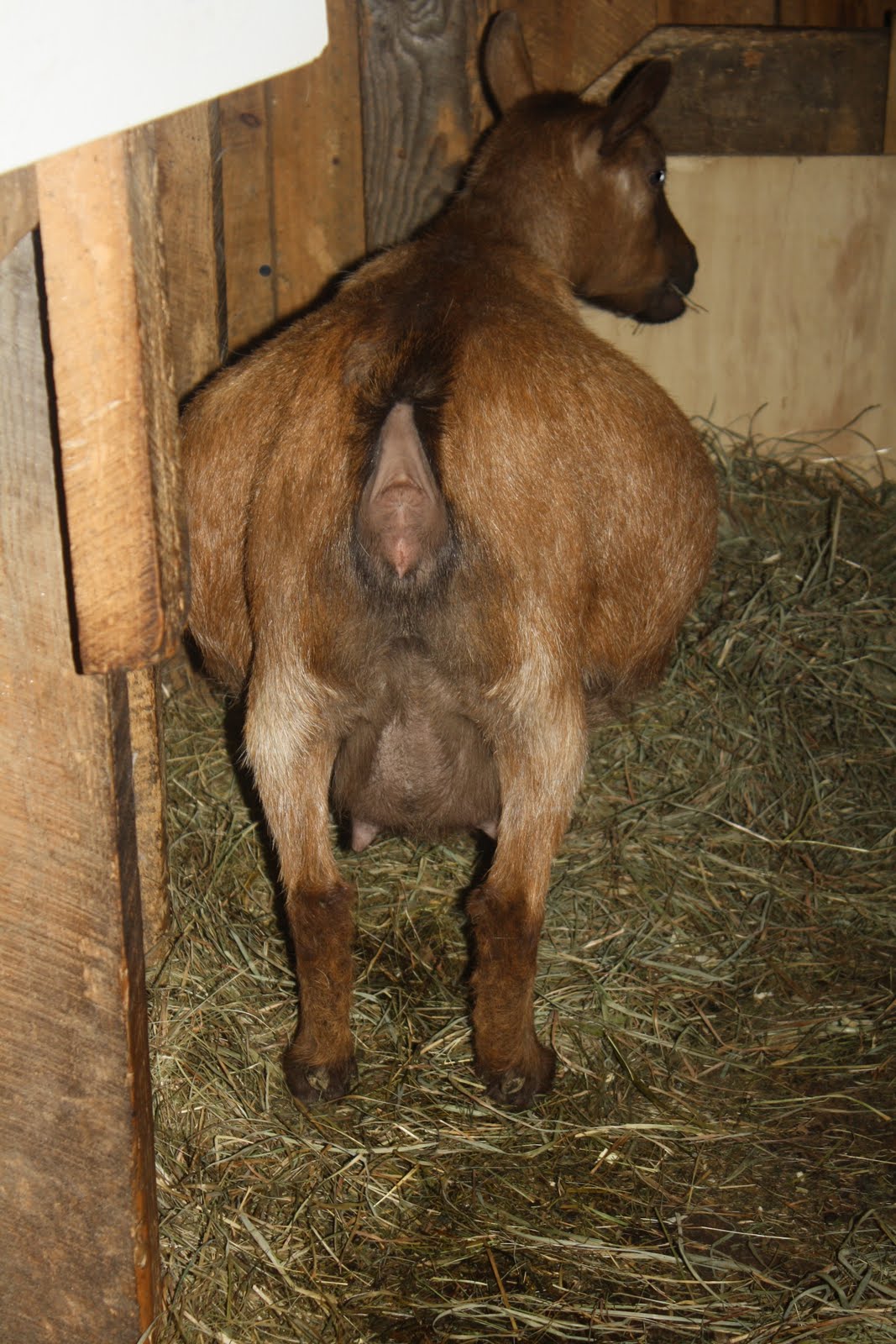
The Waiting Game...150 days since our buck's visit.

Life on a farm is a school of patience; you can't hurry the crops or make an ox in two days. Alain, Henri

It wouldn't be so hard to wait if the arrival of kids wasn't tied up with such a variety of goodness. The first birth means the start of: fresh milk, delicious cheese, summer nights watching the antics of herd of all ages set free in the field, early mornings that for some reason feel invigorating instead of painful, hours of snuggling tiny goats in a stall, and visits from great people interested in beginning down the same wonderful road or just stepping into a different world for a few hours. There is no time of year which is so overwhelmingly rich with delicious anticipation. And yet although all five of our mama goats look nearly ready to burst, they are not quite ready to let the season begin. They tease us with plaintive bleating that suggests they are ready to give birth and then let another day pass without sharing any cute babies with us. Meanwhile the cats stay close in the stalls, touching noses with the pregnant mamas, seemingly content to wait out the next few hours or days and provide a watchful eye. Inside the house, we pretend to sleep, ears tuned to the barn baby monitor, eyes forming colorful kids and tasty containers of chevre in the darkness. In a week I'm sure part of me will look longly back on the lazy mornings of winter, but for now my patience is stretched thin and if all the does went into labor tonight I would definitely not complain!